![10 Sales Dialer Options Updated Guide [2026 Edition]](https://cdn.prod.website-files.com/633ef5e495fbc55a9bea70b1/69f2ac3c5ea4ebf310d8e7dc_SDO.webp)
Our Top Picks


A practical, no-fluff breakdown of what works and what doesn't
Cold calling never disappeared; it just evolved.
On that note, sales reps are not struggling because the channel stopped working; they are struggling because manual dialing wastes a massive chunk of the day. When nearly a third of an SDR’s time disappears into ringing tones and unanswered calls, productivity suffers fast.
That is where a modern sales dialer changes the equation. The difference is not small either. Teams moving from manual dialing to a high-conversion outbound dialer often see 2 to 4 times more live conversations per hour. What makes things tricky is the sheer number of tools available today. Every vendor claims to be the best cloud-based sales dialer software, every platform promises better connect rates, and yet many teams still pick the wrong setup.
By eliminating the manual effort of dialing numbers, sales auto dialer tools allow representatives to spend more time engaging in live conversations and less time navigating phone systems.
So rather than throwing a list at you, this breakdown is structured around how these tools actually fit into real sales workflows.
Key Takeaways
- Your dialing method matters more than the tool itself: The biggest performance gap does not come from brand names, it comes from choosing the right type of sales dialer. Teams using a multi-line outbound dialer or a strong high-conversion outbound dialer consistently outperform those stuck on basic or even power dialers.
- AI and automation are now core, not optional: A modern AI-powered sales dialer 2026 is not just about calling faster. It includes real-time coaching, lead follow-up automation, and intelligent workflows that turn every rep into a more consistent performer.
- CRM integration defines long-term success: A disconnected tool slows teams down quickly. The best cloud-based sales dialer software acts as a true CRM-integrated dialer, ensuring clean data, better tracking, and stronger pipeline visibility.
The 10 Best Sales Dialer Tools in 2026
What they’re good at, where they fall short, and who should actually use them
Now that the groundwork is clear, it is time to look at real tools. Not just feature lists, but how each sales dialer fits into actual workflows.
This is not about picking the “most popular” platform. It is about matching the right cloud-based sales dialer software to your motion, your team size, and your outbound goals.
1. JustCall
Best all-in-one cloud-based sales dialer software for growing teams
JustCall sits in that sweet spot between simplicity and capability. It works well for teams that want a single sales call automation platform handling voice, SMS, and automation without stitching together multiple tools.
What makes it stand out is flexibility. You get multiple dialing modes in one place, which is rare at this price point.
Where it fits
If your team is scaling outbound but still needs a clean, manageable system, this is a strong option. It is particularly useful for teams that rely on both calling and messaging for automated lead engagement.
What you get
- Multiple dialing modes including auto and predictive
- AI-powered coaching, sentiment tracking, and call scoring
- SMS and WhatsApp built into the workflow
- Strong CRM integrations for a seamless CRM-integrated dialer experience
- Local presence dialing across many regions
What to watch for
Costs can increase as outbound volume grows, especially with call minutes. Some advanced features are gated behind higher plans.
Bottom line
A reliable AI-powered sales dialer 2026 option for SMBs that want versatility without enterprise complexity.
2. Aloware
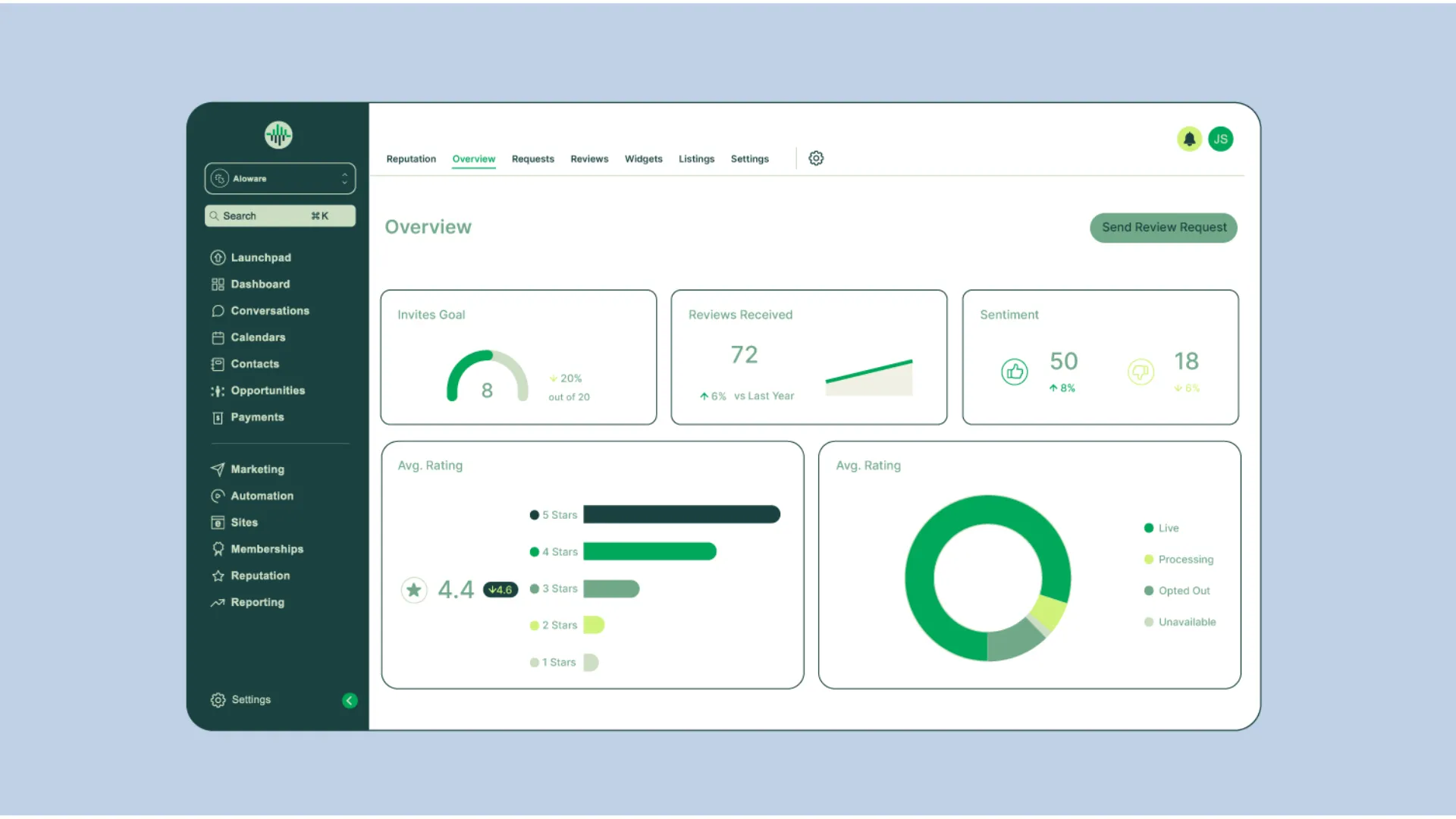
Best for CRM-first outbound teams
Aloware takes a different approach. It is not just a dialer layered on top of your workflow, it becomes part of your CRM.
That matters more than it sounds. When your call tracking for reps, messaging, and automation live inside your CRM, adoption becomes much easier.
Where it fits
Teams heavily invested in HubSpot or Salesforce that want a deeply embedded pipeline calling software experience.
What you get
- Power dialer with local presence dialing
- Built-in compliance tools like STIR and SHAKEN
- AI voice agents handling repetitive outreach
- Multichannel outreach including SMS and email
- Detailed call insights and summaries
What to watch for
User feedback points to inconsistencies in support and onboarding experiences. It is worth validating expectations before committing.
Bottom line
A strong sales engagement dialer tool for CRM-centric teams, especially those focused on structured outbound workflows.
3. Trellus
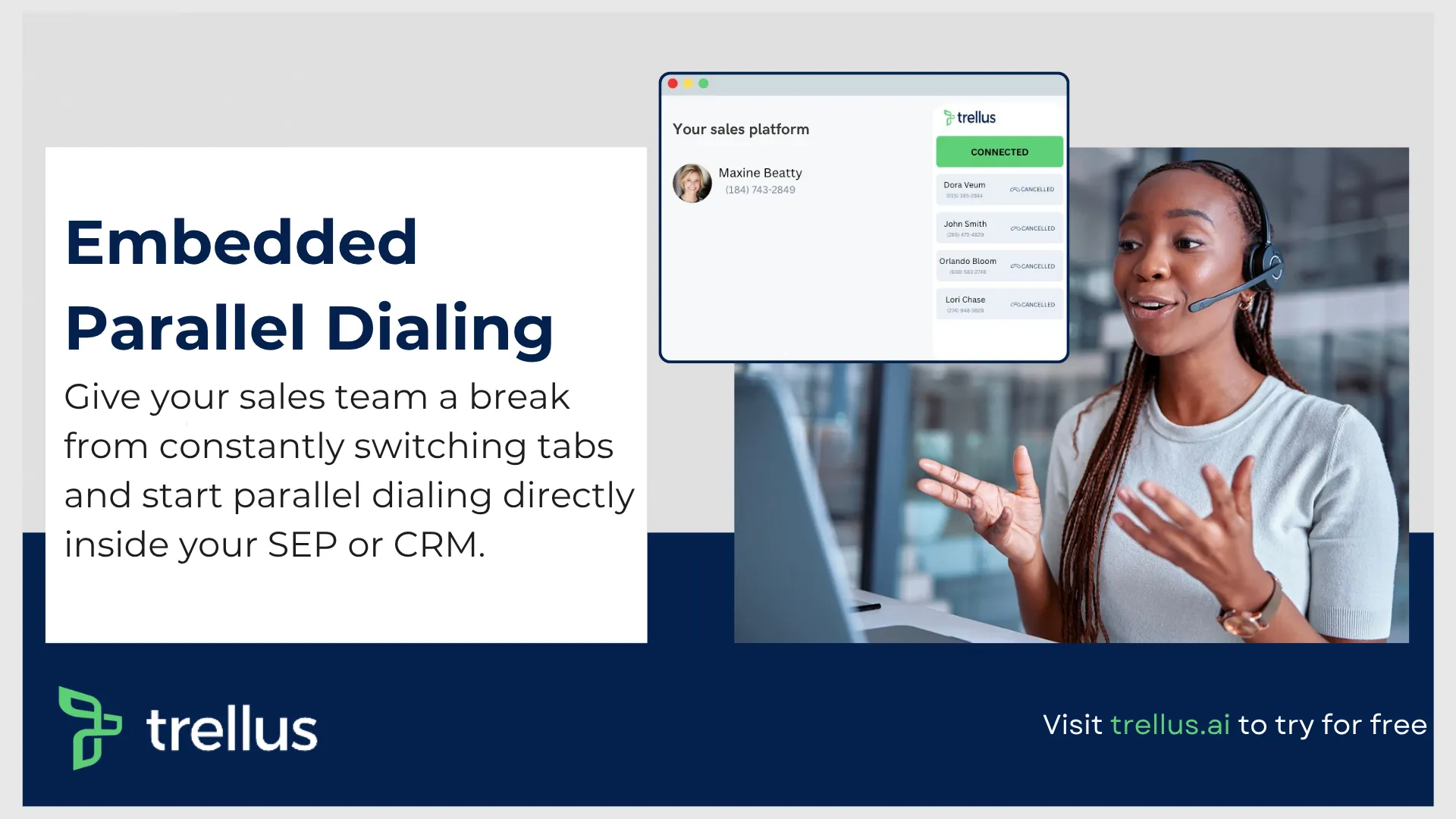
Best high-conversion outbound dialer built for modern SDR workflows
Some platforms try to be everything at once. This one takes a more focused approach and leans hard into what actually moves pipeline, real conversations.
If your team lives in outbound, juggling cold calls, follow-ups, and constant context switching, this is where things start to feel different. The product is designed as a true sales call automation platform, not just a tool that dials numbers faster.
What stands out is how naturally it blends dialing, coaching, and workflow automation into a single experience. It does not feel like a collection of features stitched together. It feels like a system built around how reps actually work day to day.
Where it fits
This is a strong match for SDR teams and outbound-heavy organizations that care about efficiency at the conversation level, not just activity metrics.
It works particularly well for:
- Teams running high-volume outbound campaigns
- Organizations looking for a high-conversion outbound dialer rather than a generic tool
- Sales leaders who want visibility into rep performance without digging through dashboards
- Companies that need a CRM-integrated dialer without constant syncing issues
If your reps are expected to generate pipeline consistently, this is the type of pipeline calling software that supports that goal without adding friction.
What makes it different
A lot of dialers promise speed. Fewer focus on quality conversations. That is where Trellus carves out its space.
Real-time AI sales calling assistant
During live calls, reps are not left guessing. The platform surfaces suggestions, objection handling cues, and contextual prompts in real time.
This turns every call into a guided experience, especially helpful for newer reps who are still building confidence. Over time, it also sharpens performance across the entire team.
Smart multi-line dialing without chaos
The system functions as a multi-line outbound dialer, but without overwhelming reps. Calls are intelligently managed so that the focus stays on conversations, not juggling connections.
This balance is what makes it feel like a true AI-powered sales dialer 2026, rather than just a faster calling tool.
Built-in lead follow-up automation
One of the biggest leaks in outbound is inconsistent follow-up. Here, follow-ups are not an afterthought.
The platform automatically triggers next steps, schedules callbacks, and keeps prospects warm through structured workflows. That turns it into more than just dialing, it becomes a full automated lead engagement engine.
Deep call tracking for reps and managers
Every interaction is captured, analyzed, and translated into insights. Managers can see patterns across calls, while reps get immediate feedback on what is working.
This level of call tracking for reps helps teams improve faster without relying on manual reviews.
The day-to-day experience
What really defines this tool is how it feels during actual use.
Reps are not jumping between tabs or tools. The workflow stays tight. Calls, notes, follow-ups, and insights all sit in one place. That reduces cognitive load and keeps momentum going throughout the day.
It also supports a more structured rhythm. Lists are cleaner, outreach is more consistent, and conversations feel less rushed because the system handles everything around them.
For teams that have struggled with scattered telephony software for sales teams, this shift alone can make a noticeable difference.
4. Salesfinity
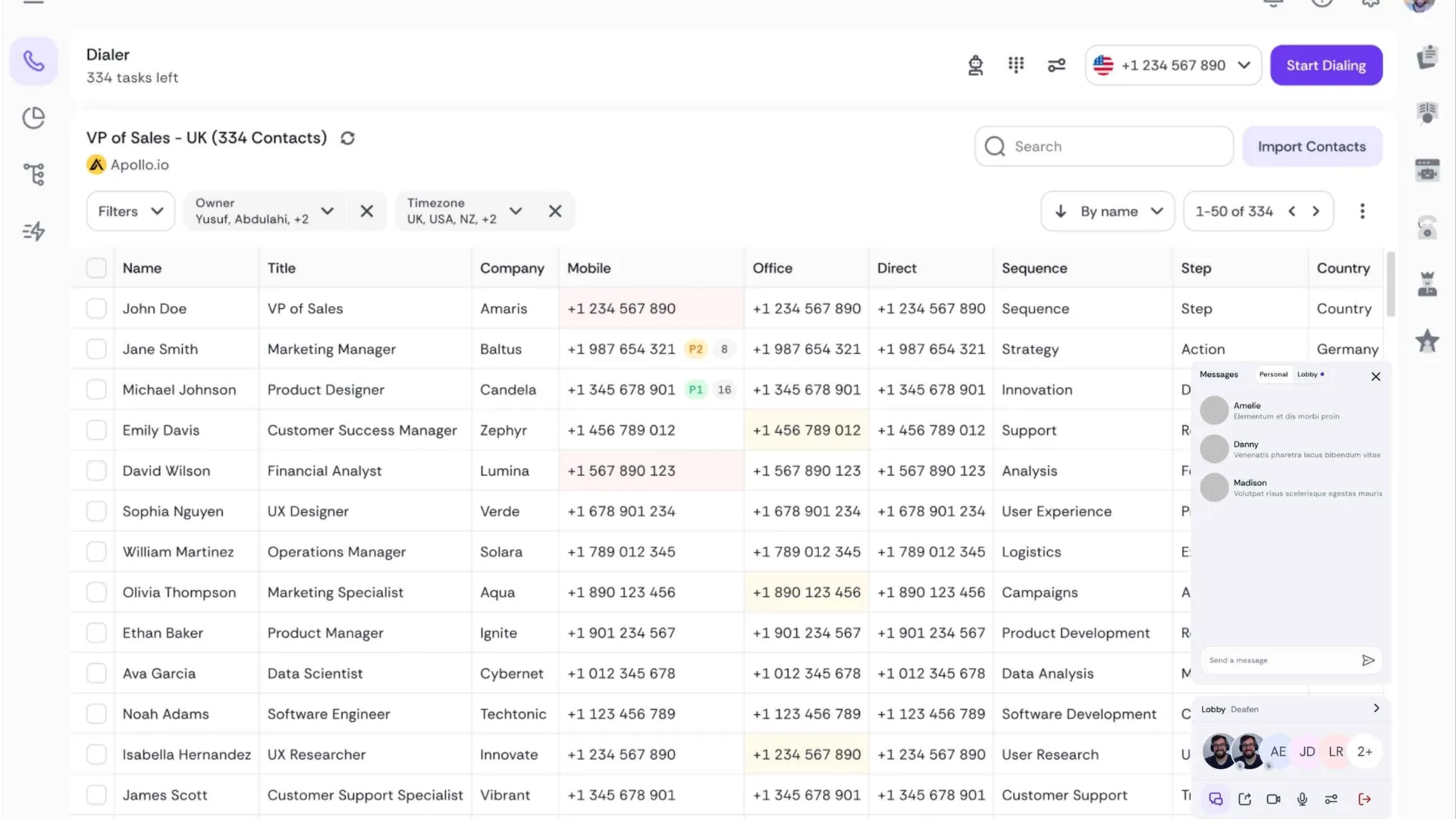
Best budget-friendly parallel dialer for SDR teams
Salesfinity is designed for one thing, maximizing conversations.
It brings parallel dialing into a more accessible price range, which opens the door for smaller teams to use a high-conversion outbound dialer model.
Where it fits
Outbound-heavy SDR teams that want performance gains without enterprise pricing.
What you get
- Multi-line dialing, up to five calls at once
- AI coaching during live calls
- Automated data enrichment across multiple sources
- Built-in follow-up automation for warm prospects
- Virtual sales floor for team collaboration
What to watch for
It is primarily focused on calling. If you need a full sales call automation platform across multiple channels, you will likely need additional tools.
Bottom line
One of the most accessible ways to step into multi-line outbound dialer workflows.
5. Talkdesk
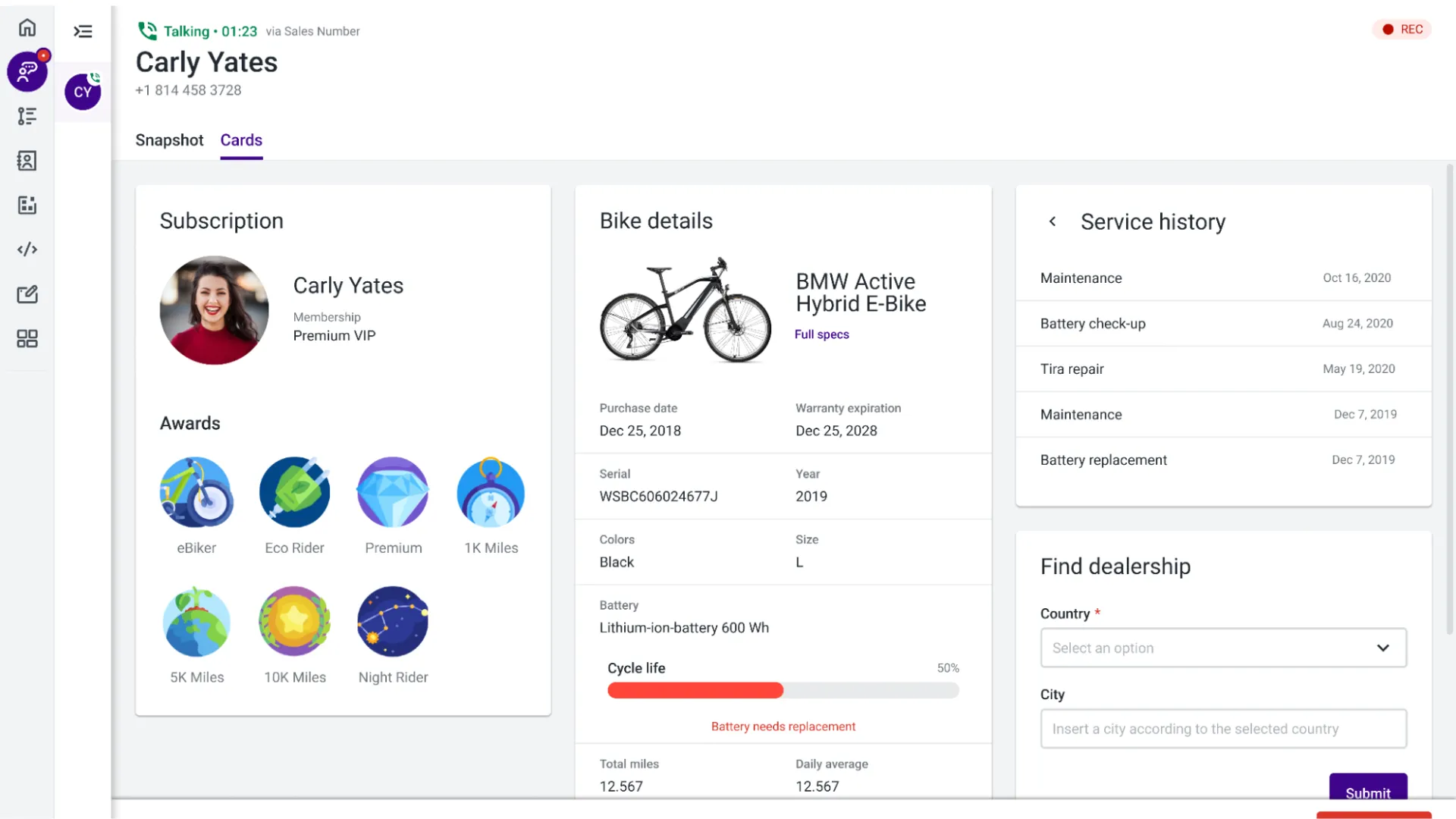
Best predictive dialing solution for large organizations
Talkdesk is not just a dialer, it is a full contact center platform. That changes how you think about it.
It combines voice, automation, and workforce management into one system, making it a serious option for enterprise teams.
Where it fits
High-volume environments where predictive dialing and omnichannel communication are essential.
What you get
- Predictive, power, and preview dialing
- AI assistance during live calls
- Omnichannel communication across voice, chat, and more
- Workflow automation and visual IVR builders
- Advanced workforce management tools
What to watch for
Pricing can scale quickly, and complexity increases as you add features.
Bottom line
A robust predictive dialing solution for sales, best suited for large teams rather than lean outbound setups.
6. Close CRM

Best built-in CRM with native dialing
Close flips the model. Instead of adding a dialer to your stack, it builds everything into one platform.
That makes it one of the most cohesive sales productivity tools for teams that want simplicity.
Where it fits
Startups and SMBs that want a unified system without juggling multiple tools.
What you get
- Built-in power dialer
- Predictive dialing on higher tiers
- Email and SMS sequences
- Smart lead filtering and automation
- Native mobile apps for flexibility
What to watch for
Usage-based pricing for calls can surprise high-volume teams.
Bottom line
A clean, focused cloud sales dialer for teams that want everything in one place.
7. Koncert
Best flexible dialing platform for B2B teams
Koncert stands out because of its flexibility. It offers multiple dialing modes in one system, which is rare.
That allows teams to adapt their approach depending on campaign needs.
Where it fits
B2B outbound teams running different types of campaigns simultaneously.
What you get
- Parallel dialing for high-volume outreach
- Single-line dialing for controlled workflows
- Real-time coaching through AI
- Automated data enrichment
- Strong CRM integrations
What to watch for
Initial setup can take time, especially for less technical teams.
Bottom line
A versatile sales dialer that adapts to different outbound strategies.
8. Nooks
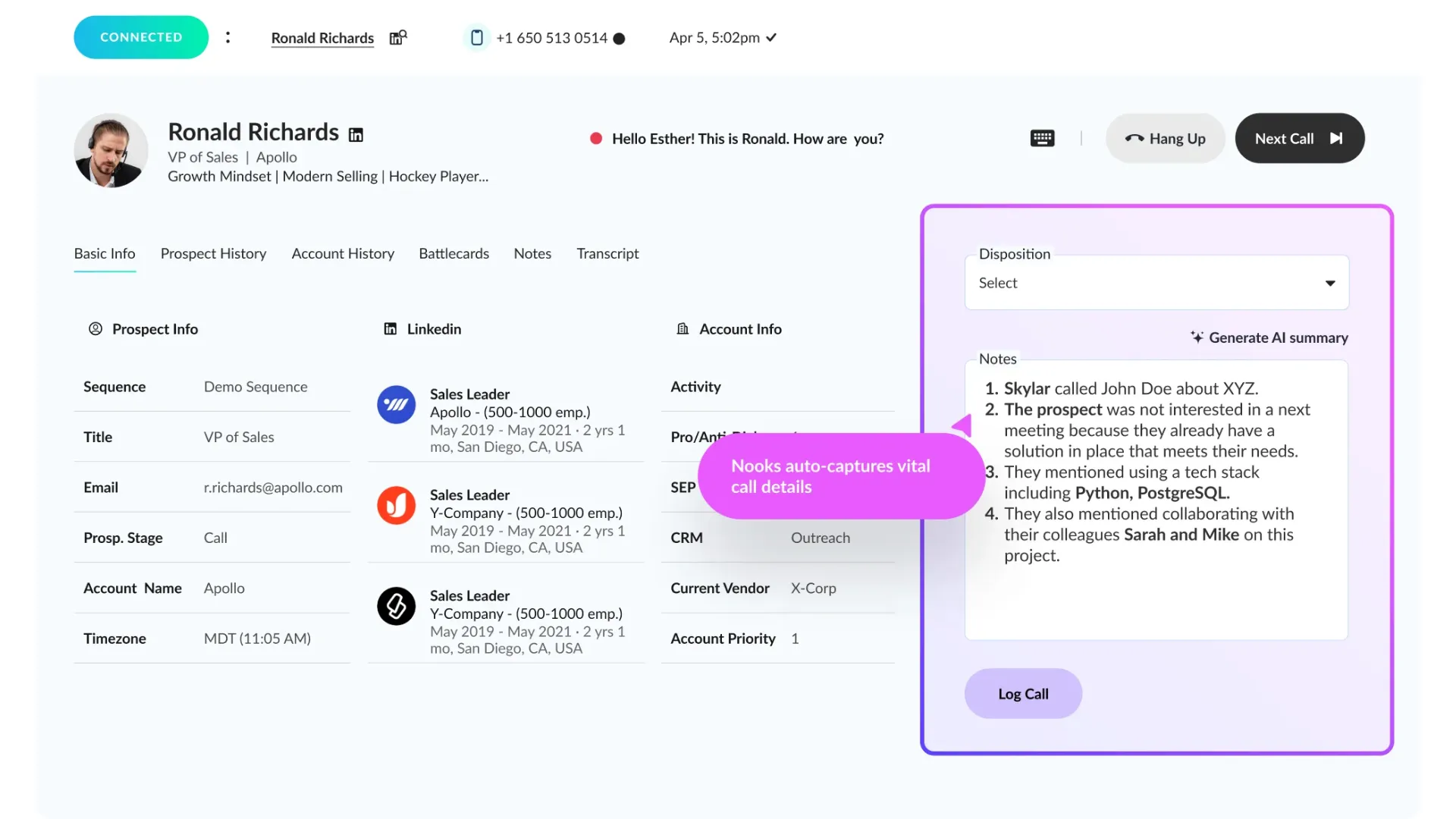
Best premium AI-powered parallel dialer
Nooks is built for performance. It focuses on maximizing conversations and improving rep efficiency.
The standout feature is the virtual sales floor, which adds a collaborative layer to outbound calling.
Where it fits
High-performing SDR teams where every conversation directly impacts revenue.
What you get
- Parallel dialing with multiple simultaneous calls
- AI voicemail detection and filtering
- Real-time coaching and collaboration
- Automated research for better call personalization
- Deep integrations with major sales platforms
What to watch for
Pricing is on the higher end, making it better suited for teams with strong ROI per deal.
Bottom line
A premium AI-powered sales dialer 2026 for teams that want maximum output from every rep.
9. Orum

Best for enterprise-grade parallel dialing performance
Orum focuses heavily on speed and efficiency. It is built to deliver more live conversations without increasing rep workload.
This makes it one of the strongest contenders in the high-conversion outbound dialer category.
Where it fits
Teams prioritizing conversation volume above everything else.
What you get
- Fast parallel dialing engine
- AI detection for voicemails and bad numbers
- Live call coaching
- Analytics focused on conversation outcomes
- CRM integrations for seamless workflows
What to watch for
Less emphasis on multichannel outreach compared to broader platforms.
Bottom line
A performance-first automated calling system built for serious outbound teams.
10. PhoneBurner

Best for simplicity and fast onboarding
PhoneBurner has been around for a while, and its strength lies in ease of use.
It is not the most advanced platform, but it delivers reliable results without a steep learning curve.
Where it fits
Teams that want quick deployment and predictable workflows.
What you get
- Power dialing with no delays between calls
- Built-in email and SMS tools
- Lead management features
- Call tracking and reporting
- Simple integrations
What to watch for
It lacks true parallel dialing capabilities.
Bottom line
A dependable sales calling dialer for teams that value simplicity over cutting-edge features.
Why Sales Dialers Matter More in 2026
Sales teams today are operating in a very different environment compared to even a few years ago. Prospects are harder to reach, competition is tighter, and attention spans are shorter. That puts pressure on every part of your outreach stack.
A sales call automation platform is no longer just about dialing numbers faster. It has become a core part of your revenue engine.
Here is what has changed.
Time is your most expensive resource
Without a dialer, reps spend a huge portion of their day clicking numbers, waiting through rings, and leaving voicemails. A sales calling dialer removes that friction and turns idle time into actual conversations.
Conversations matter more than activity
Making 100 dials means nothing if only 5 people pick up. A modern multi-line outbound dialer focuses on connecting reps only when someone answers, which shifts the metric from activity to outcomes.
Automation is expected, not optional
An automated calling system today handles much more than dialing. It logs calls, triggers follow-ups, enriches contact data, and even suggests what to say next through an AI sales calling assistant.
CRM alignment is critical
A disconnected dialer creates more problems than it solves. A proper CRM-integrated dialer ensures that every call, note, and outcome feeds directly into your pipeline without extra effort.
The Big Question: Do You Really Need a Sales Dialer?
This comes up more often than you would expect. Many founders and small teams ask, do I need a sales dialer for my business?
The honest answer depends on your motion.
If your team is making fewer than 20 to 30 calls a day, a basic VoIP tool might be enough. But once outbound becomes a real growth lever, manual dialing becomes a bottleneck.
Here is a simple way to think about it.
- If reps complain about low connect rates, you need a better dialing system
- If follow-ups are inconsistent, you need lead follow-up automation
- If your CRM data is messy, you need a dialer that enforces structure
- If your pipeline growth depends on outbound, you need pipeline calling software
At that point, a cloud sales dialer is not just helpful, it becomes essential.
Are All Sales Dialers the Same?
Not even close. One of the biggest misconceptions is that every sales engagement dialer tool works the same way.
That leads to another common question, is a sales dialer the same as a power dialer?
Short answer, no.
Different dialers are built for completely different use cases. Picking the wrong type is one of the fastest ways to kill ROI.
Before getting into specific tools, it is important to understand the four core categories. That context makes every software choice much clearer.
The 4 Types of Sales Dialers (And What They Mean for You)
1. Basic VoIP or Softphone
This is the simplest form of telephony software for sales teams. You dial one number at a time, either manually or through click-to-call.
It works fine for very small teams or hybrid roles where calling is not the primary activity. But the limitation shows up quickly once outbound volume increases.
Reps still sit through every unanswered call, every voicemail, every delay. Over time, that adds up to lost opportunities.
This is why most growing teams move beyond this stage fairly quickly.
2. Power Dialer for Sales
A power dialer for sales removes the manual step between calls. The system automatically dials the next number as soon as the previous call ends.
This is where efficiency starts to improve.
Reps no longer waste time clicking through lists, and workflows become more structured. It also pairs well with automated lead engagement, since sequences can include calls, emails, and tasks.
That said, it still dials one number at a time. So while it improves speed, it does not eliminate idle time completely.
3. Parallel Dialer
This is where things get interesting.
A multi-line outbound dialer can call multiple numbers at once and only connect the rep when a real person answers. Everything else, voicemails, bad numbers, unanswered calls, gets filtered out.
For teams focused on outbound, this is often the biggest performance unlock.
It turns dialing into a conversation engine rather than an activity checklist. That is why many consider it the most effective AI-powered sales dialer 2026 category for SDR teams.
4. Predictive Dialing Solution for Sales
Predictive dialers take things even further. They use algorithms to predict when agents will become available and dial ahead of time.
This works well in large call centers where volume is extremely high.
However, for B2B teams, there is a catch. Compliance risks, abandoned calls, and regulatory issues can quickly outweigh the benefits. That makes this type of predictive dialing solution for sales more suitable for B2C environments.
![10 Sales Dialer Options Updated Guide [2026 Edition]](https://cdn.prod.website-files.com/633ef5e495fbc55a9bea70b1/63455c71e41ddfa1100e26e0_1561658014602%20(2).jpeg)

Embed Trellus Parallel Dialer Within Your SEP & 4x Your Conversations